






Hill End
Craigmoor House, Hill End Historic Site - Credit: John Spencer | DCCEEW


Step back into a bygone era as you stroll the pretty streets of the historic goldmining town of Hill End. Once a gold rush boom town, Hill End is now a heritage-listed historic site and a haven for Australian artists.
In the 1870s, the booming gold mines of Hill End were known as ‘the richest quarter mile in the world’. It was here, in October 1872, that the largest gold specimen ever found was unearthed at the Star of Hope mine. Measuring 1.5 metres tall and weighing 286 kilograms – of which more than 93 kilograms was pure gold – it would become known as the Holtermann Nugget. At its peak the town had 8,000 residents, 28 pubs, an oyster bar and a kilometre of bustling shopfronts.

General Store, Hill End - Credit: John Spencer | DCCEEW
Some of the historic village's original buildings still stand. Follow the self-guided Village walking track and stop at the Great Western Store to see fascinating old photographs before grabbing a coffee at the General Store or outdoor supplies at Northeys Store. Admire Craigmoor, Hill End's grandest historic residence, and Beyers Cottage, built in 1850 by Louis Beyers, one of the miners involved in the discovery of the Holtermann Nugget. Visit the Hill End Heritage Centre for more stories and artefacts of Hill End's past.
At History Hill Museum this exciting period is brought to life. Go underground to explore a recreated gold mine and see more than 10,000 artefacts from the 19th-century gold rush on display. If you want to try your luck at discovering some gold, join Jhob's Gold Panning Tours. Your expert guide will share their wealth of experience and take you to their favourite streams around Hill End where you could strike it lucky.

Jhob's Gold Panning Tours, Hill End - Credit: Bathurst Visitor Information Centre
Hill End's striking landscapes and golden light drew many famous Australian painters to the area from the 1940s to the 1960s, including Brett Whiteley, John Olsen and Russell Drysdale. Contemporary painters, photographers and sculptors still flock here today, looking for inspiration. This rich artistic legacy is honoured at the Hill End Art Gallery, showcasing a diverse range of works.

Hill End Art Gallery, Hill End - Credit: Hill End Arts Council Inc
Autumn is among the best times to visit Hill End, when the town's foliage is painted in bright, seasonal colours. Enjoy the scenic views at the Beaufoy Merlin lookout and Bald Hill lookout. You can see more of the surrounding countryside from a four-wheel drive or bike along the Bridle Track, which runs between Bathurst and Hill End.

The Bridle Track, Duramana - Credit: Henry Denyer-Simmons | Bathurst Regional Council
Join Simmo's Offroad Tours, an Eco Certified operator, for an outdoor adventure. Hop in a four-wheel drive with one of their guides or tag along in your own vehicle to explore rugged national parks and remote wilderness areas. Around Hill End, they can take you gold panning, trout fishing, camping, bushwalking, foraging and much more.

Simmo's Off Road Tours, Bathurst
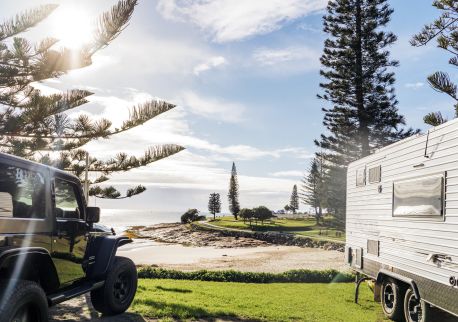
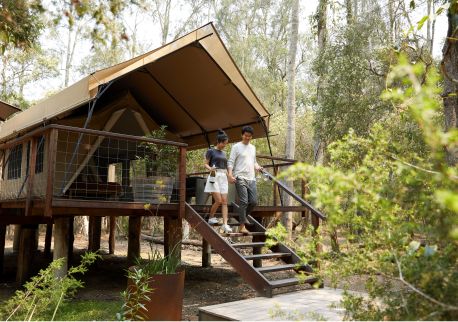
The historic theme continues with the accommodation options in Hill End. The Post Office Residence and Stables dates to 1872 and combines grand colonial style with modern convenience, sleeping up to eight. The Hill End Micro Pub has cosy, vintage rooms with shared facilities. Pitch a tent at the Village Campground, a short stroll from the centre of the village, or in the peaceful bush surrounds of Glendora Campground.

Post Office Residence, Hill End - Credit: John Spencer | DCCEEW
Hill End is just under four hours' drive from Sydney and 4.5 hours from Canberra. It is one-hour past Bathurst. Due to current road closures, alternative routes are available from Lithgow or along the Bells Line of Road. Make it a road trip and see more of the region on our Tour of Caves and Fossils route. You can catch the train direct from Sydney to Bathurst daily, which takes around four hours, and hire a car to explore the region. Express coaches also run to Bathurst regularly and the trip is just over three hours. Rex and QantasLink operate daily flights from Sydney to Bathurst Airport.


