











Stronger together community
Event dates to be confirmed: October 2026 – June 2027

Product List
Product List
Overview
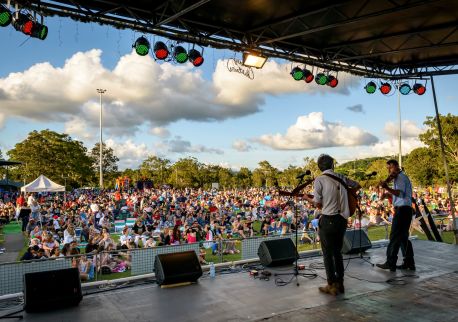
The Stronger Together Community Event is a heartfelt evening dedicated to supporting unwell members of our community and reminding them that they are never alone. Bringing together families, neighbours, local organisations, and long‑standing community champions, the event celebrates the spirit of care, connection, and solidarity that defines Gunnedah.
Guests will enjoy an uplifting night of entertainment, shared stories, good food, and…
The Stronger Together Community Event is a heartfelt evening dedicated to supporting unwell members of our community and reminding them that they are never alone. Bringing together families, neighbours, local organisations, and long‑standing community champions, the event celebrates the spirit of care, connection, and solidarity that defines Gunnedah.
Guests will enjoy an uplifting night of entertainment, shared stories, good food, and meaningful moments that highlight the strength we find when we stand beside one another. The evening will feature opportunities to contribute through raffles, donations, and community‑driven fundraising activities, with all proceeds going directly toward providing practical assistance, comfort, and wellbeing support for those facing illness or difficult health journeys.
Stronger Together is a reminder of what makes the community special: compassion, generosity, and the belief that every person deserves to feel supported. By coming together, help ease the burden on unwell residents and their families, strengthen local support networks, and build a community where kindness is not just a value but an action.
Get in touch
Location
FAQs
Accessibility
Access and Inclusion Statement
A quiet space is available at the venue/ facility
Actively welcomes people with access needs.
Advise tour guides of the access needs of guests at the time of booking (includes pick up and drop off requirements)
Ask all visitors if there are any specific needs to be met
Caters for people who are blind or have vision loss
Caters for people who are deaf or have hearing loss
Caters for people who use a wheelchair.
Caters for people with allergies and intolerances.
Caters for people with high support needs who travel with a support person
Caters for people with sufficient mobility to climb a few steps but who would benefit from fixtures to aid balance. (This includes people using walking frames and mobility aids)
Employ people with disability
Have Braille and tactile signage on all information and paths of travel
Have a doorbell or intercom at an accessible height and display a contact number (accessible height is 900mm-1100 mm)
Have a low noise reception areas with hearing loss friendly acoustics and adequate lighting for viewing facial expressions (includes common areas which are free of background noise, background music)
Have a step free main entrance to the building and/or reception area (includes ramps or slopes with a maximum gradient of 1:14, otherwise are too steep for wheelchairs)
Have a wheelchair accessible toilet / shower and change room
Have a wheelchair/scooter charging station (power point) in an accessible location
Have accessibility information and photos, including of a bathroom, room and/or floor plan on your website (can be emailed on request)
Have accessible seating areas in theatrette
Have an accessible public toilet which is unlocked
Have an appropriate area for toileting an assistance dog
Have at least one wheelchair accessible parking space with wheelchair accessible signage clearly displayed (International standards are 3200mm wide x 2500 mm high)
Have audio enabled lifts
Have doorways which are easy to open and have lever handles (doorways 850mm or wider when open and not heavy)
Have Exit signs which are visible at a ground level (high level signs are difficult to see in a fire)
Have grab rails in the bathroom
Have handrails on all your stairways
Have lifts with enough space for people using a mobility aid to enter and turn around to use the lift buttons. Buttons are at accessible height.
Have raised tactile buttons in your lifts
Have step free access to restaurant, lounge and bar
Have step free access to the conference or function room
Have step free outdoor pathways (includes picnic areas, barbecues and shelters)
Have TVs with captioning option
Have volume controlled phones
Have wheelchair access to amusements and activities including boats and bush trails (includes tour rides, skyways, trolley cars, flying fox, amusement rides and boating)
Have wheelchair accessible picnic tables (picnic tables require 720mm knee clearance and 800mm maximum height)
Have wheelchair accessible transport options available in the general vicinity (provide information on name of the operator, phone and website link to individual providers for private vehicles, community transport train, mini vans, hire cars, buses, taxis, ferry, tram, light rail etc in your access statement)
Modify your cooking and cleaning practices to cater for people with food allergies or chemical intolerances (could include menus with meals free from: nuts, dairy, seafood, eggs, gluten etc)
Offer a range of contact methods for receiving complaints
Offer multiple options for booking - web, email, phone
Provide assistance with booking arrangements (includes providing clear itineraries with written instructions on what to do at various destinations)
Provide beach matting and beach wheelchairs for people to access the water
Provide digital communication materials (hard copy information is also available on line)
Provide information in audio format (includes an audio described map of your venue, audio descs of performances and/ or displays)
Provide information in large print
Provide seating in common areas including reception area
Provide wheelchair access to spa/gym
Train your staff in customer service for people with vision loss (training would incorporate way finding and communicating with people with vision loss)
Train your staff in communicating with people who are deaf or have hearing loss
Train your staff in communicating with people with learning or behavioural challenges
Train your staff in disability awareness
Use easy read fonts in your signage and communication materials (Helvetica and Arial)
Use floors/coverings which are slip resistant, firm and smooth
Use non-slip tiles in the bathroom or slip resistant matting
Use Plain English / easy read signage and information (includes menus and emergency information)
Website meets WCAG 2.0 accessibility standards
Welcomes and assists people who have challenges with learning, communication, understanding and behaviour. (includes people with autism, intellectual disability, Down syndrome, acquired brain injury (ABI), dyslexia and dementia)