














Hunter Innovation Festival
Tue 13 Oct '26 – Tue 24 Nov '26


Product List
Product List
Overview
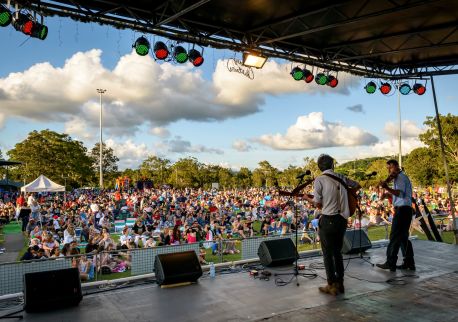
The Hunter Innovation Festival is a premier event showcasing the brightest ideas and technologies emerging from the region. The festival serves up an exciting program of interactive exhibitions and stimulating panel discussions.
Visitors immerse themselves in a dynamic environment of forward thinking and creativity. Whether guests are looking for groundbreaking startup pitches or insights into artificial intelligence, there is something for all…
The Hunter Innovation Festival is a premier event showcasing the brightest ideas and technologies emerging from the region. The festival serves up an exciting program of interactive exhibitions and stimulating panel discussions.
Visitors immerse themselves in a dynamic environment of forward thinking and creativity. Whether guests are looking for groundbreaking startup pitches or insights into artificial intelligence, there is something for all technology enthusiasts.
Industry leaders and emerging entrepreneurs take the stage to share their knowledge. Both local professionals and travelling delegates fill the venues to connect and collaborate.
The event stands out by uniting diverse sectors like energy, aerospace, health and advanced manufacturing. Attendees take a journey through the interactive showcases and enjoy networking with creative minds during the evening sessions.
Get in touch
Location
FAQs
Accessibility
Access and Inclusion Statement
A quiet space is available at the venue/ facility
Actively welcomes people with access needs.
Adhere to The Food Authority requirements for allergy management in food preparation
Ask all visitors if there are any specific needs to be met
Caption all entertainment (TVs, live shows, performances)
Caters for people who are blind or have vision loss
Caters for people who are deaf or have hearing loss
Caters for people who use a wheelchair.
Caters for people with allergies and intolerances.
Caters for people with high support needs who travel with a support person
Caters for people with sufficient mobility to climb a few steps but who would benefit from fixtures to aid balance. (This includes people using walking frames and mobility aids)
Employ people with disability
Have Braille and tactile signage on all information and paths of travel
Have a doorbell or intercom at an accessible height and display a contact number (accessible height is 900mm-1100 mm)
Have a low noise reception areas with hearing loss friendly acoustics and adequate lighting for viewing facial expressions (includes common areas which are free of background noise, background music)
Have a step free main entrance to the building and/or reception area (includes ramps or slopes with a maximum gradient of 1:14, otherwise are too steep for wheelchairs)
Have a wheelchair accessible toilet / shower and change room
Have a wheelchair/scooter charging station (power point) in an accessible location
Have accessibility information and photos, including of a bathroom, room and/or floor plan on your website (can be emailed on request)
Have accessible seating areas in theatrette
Have an accessible public toilet which is unlocked
Have an appropriate area for toileting an assistance dog
Have at least one wheelchair accessible parking space with wheelchair accessible signage clearly displayed (International standards are 3200mm wide x 2500 mm high)
Have doorways which are easy to open and have lever handles (doorways 850mm or wider when open and not heavy)
Have equipment to respond to anaphylactic shock such as epi–pens and defibrillator
Have Exit signs which are visible at a ground level (high level signs are difficult to see in a fire)
Have grab rails in the bathroom
Have handrails on all your stairways
Have lifts with enough space for people using a mobility aid to enter and turn around to use the lift buttons. Buttons are at accessible height.
Have raised tactile buttons in your lifts
Have step free access to restaurant, lounge and bar
Have step free access to the conference or function room
Have step free outdoor pathways (includes picnic areas, barbecues and shelters)
Have visual alerts for emergencies (Include flashing light)
Have wheelchair accessible transport options available in the general vicinity (provide information on name of the operator, phone and website link to individual providers for private vehicles, community transport train, mini vans, hire cars, buses, taxis, ferry, tram, light rail etc in your access statement)
Modify your cooking and cleaning practices to cater for people with food allergies or chemical intolerances (could include menus with meals free from: nuts, dairy, seafood, eggs, gluten etc)
Offer a range of contact methods for receiving complaints
Offer multiple options for booking - web, email, phone
Provide assistance with booking arrangements (includes providing clear itineraries with written instructions on what to do at various destinations)
Provide digital communication materials (hard copy information is also available on line)
Provide information in large print
Provide linen that is chemical and fragrance free (if requested)
Provide seating in common areas including reception area
Provide toiletries which are chemical and fragrance free (if requested)
Train your staff in customer service for people with vision loss (training would incorporate way finding and communicating with people with vision loss)
Train your staff in communicating with people who are deaf or have hearing loss
Train your staff in communicating with people with learning or behavioural challenges
Train your staff in disability awareness
Train your staff to respond to allergic reactions
Use easy read fonts in your signage and communication materials (Helvetica and Arial)
Use floors/coverings which are slip resistant, firm and smooth
Use non-slip tiles in the bathroom or slip resistant matting
Use Plain English / easy read signage and information (includes menus and emergency information)
Website meets WCAG 2.0 accessibility standards
Welcomes and assists people who have challenges with learning, communication, understanding and behaviour. (includes people with autism, intellectual disability, Down syndrome, acquired brain injury (ABI), dyslexia and dementia)