






















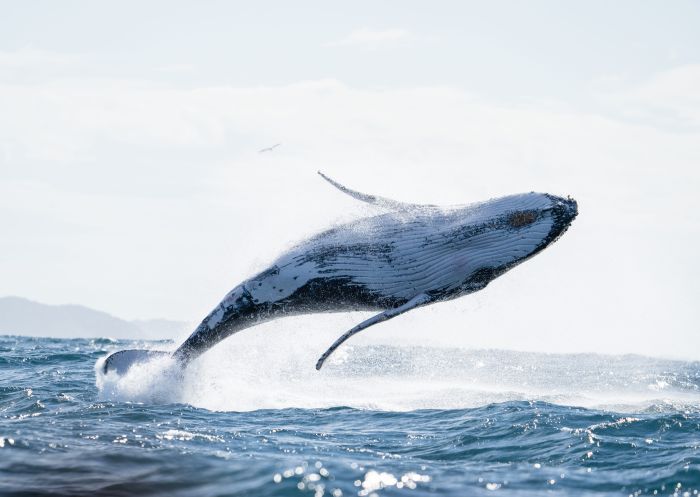
As the most easterly point on the Australian mainland, Byron Bay has a front row seat to the annual whale migration along the Humpback Highway. Spot these gentle giants as they breach and blow – whether from shore, on a cruise or in a kayak.
When can you see whales in Byron Bay?
Every year, from May through November, more than 50,000 humpback whales travel up and down the east coast of Australia on their annual migratory path from Antarctica. They linger in the warm waters off the Byron Bay coast, the most easterly point on the mainland, providing ample opportunities for whale watching. While you can spot them as early as May, tours generally don't start operating until June. They will come closest to shore on the southern migration from August, taking the time to rest in Byron’s calm waters with their new calves.
Out of the Blue Adventures, Ballina
Best whale watching lookouts
The Cape Byron Headland Reserve is where thousands of morning people flock every year to watch the first sunrise across mainland Australia – this is the continent’s most easterly point (islands excluded). Views abound for observing migrating whales, whether you’re at the whitewashed Cape Byron Lighthouse that gleams year-round, or wandering through glorious coastal forest to deserted beaches.
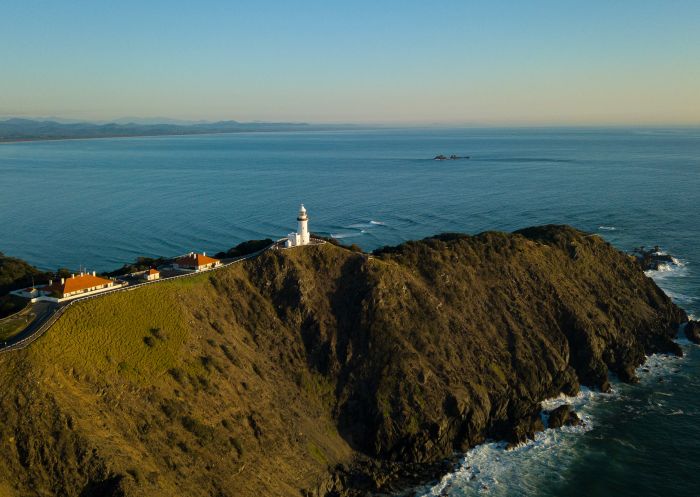
Cape Byron Lighthouse, Byron Bay
Travel just 30 minutes south to coastal Ballina to watch whale acrobatics from Lighthouse Beach (also a hotspot for seabirds and dolphins), or from the viewing platforms at Angels Beach, Flat Rock and Skennars Head. In between Byron and Ballina, Rocky Point and the Pat Morton Lookout in Lennox Head also provide ideal vantages.
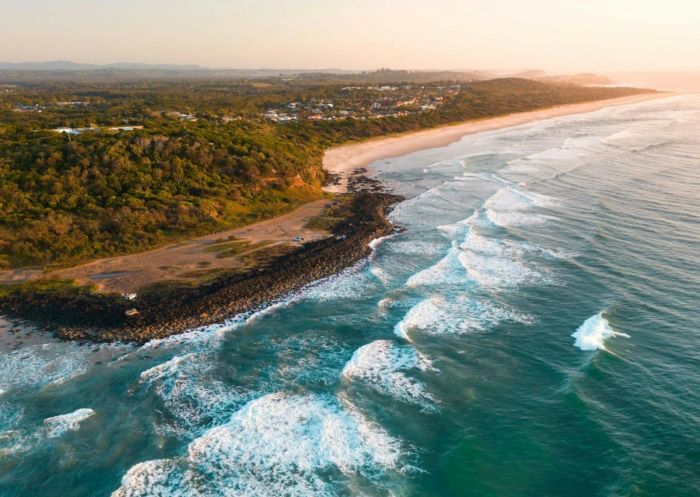
Angels Beach, East Ballina - Credit: Ballina Shire Council
Whale watching cruises
Want to get closer to the whale-watching action? Join an eco-friendly cruise to marvel at these agile creatures in their natural environment. Blue Bay Whale Watching has a comfortable hard-bodied boat with a cabin, while operators like Wild Byron have you zipping across the waves in open-air, rigid inflatable boats. Both Out of the Blue Adventures and Blue Seafaris have an experienced marine biologist on board to lead the tour, giving you a deeper insight into the lives of these fascinating creatures. Boats also carry hydrophones, so you can listen to the whales singing.
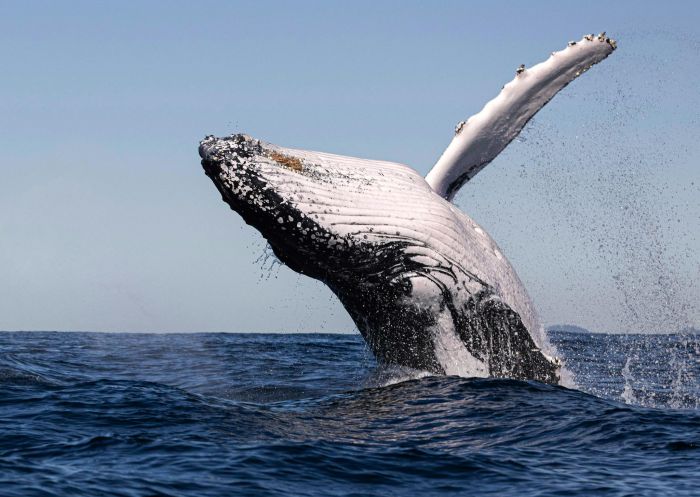
Blue Seafaris, Brunswick Heads - Credit: Blue Seafaris
Kayaking with whales in Byron Bay
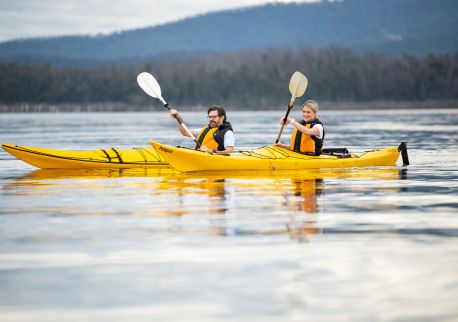
For eye-level encounters with the whales, take a tour with Go Sea Kayak Byron Bay or Cape Byron Kayaks. These tours run throughout the whole season, but you’ll have the best chance of paddling alongside them during the southern migration (from August to November) when they come close to shore. Does it get any better than this?
In August, you can don a wetsuit and snorkel on a tour with Wild Byron to swim with the whales. Getting this close is tightly regulated and can’t be done within the Cape Byron Marine Park. The team takes their time to find the right spot and the right whales, and interactions only take place on the whales’ terms. There will even be an underwater photographer on hand to capture your incredible encounter.
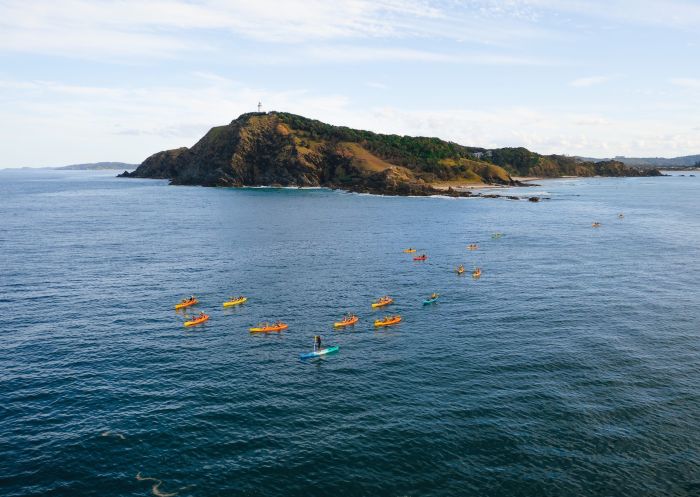
Cape Byron Kayaks, Byron Bay
Accommodation in Byron Bay with ocean views
What could be more memorable than spotting one of the ocean's gentle giants from your front porch? The Assistant Lighthouse Keepers' Cottages enjoy sweeping views of the coastline surrounding the Cape Byron Lighthouse – there are two cottages, each with three bedrooms, sleeping up to six.
Also boasting spectacular coastal vistas, as well as direct access to one of Byron's best beaches, Mildenhall Cottage and Thomson Cottage are close together above Clarke’s Beach. Other fantastic beachside retreats include Shambhala at Byron, Raes on Wategos and Reflections Holiday Parks Byron Bay.
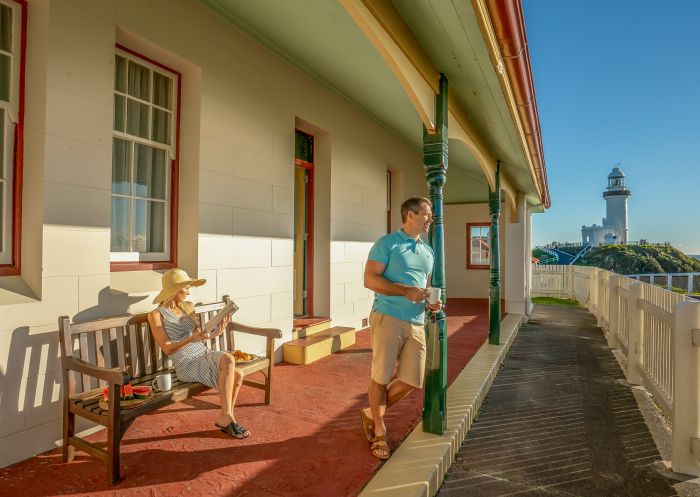
Assistant Lighthouse Keepers Cottages, Cape Byron State Conservation Area - Credit: John Spencer, DPE
FAQs
When is the best time to see whales in Byron Bay?
When is the best time to see whales in Byron Bay?
Whales can be seen around Byron Bay any time between May and November, but you’ll have better luck during some months.
- May – occasional sightings of adults swimming north, can be far offshore
- June – frequent sightings and breaching, whale watching tours start
- July – peak whale watching season, lots of high-energy surface action like breaching and tail slapping
- August – mothers and calves swimming south closer to shore, great for kayaking with whales
- September – peak month for southern migration, lots of young playful calves close to shore
- October – consistent numbers and sightings
- November – end of the season, a few late whales to be spotted
Can you see whales from Cape Byron Lighthouse?
Can you see whales from Cape Byron Lighthouse?
Absolutely! As the most easterly point on the Australian mainland, the Cape Byron Lighthouse is one of the best vantage points for whale watching.
How long are whale watching cruises?
How long are whale watching cruises?
Whale watching tours last two to three hours.
What happens if no whales are seen?
What happens if no whales are seen?
Most operators offer a whale sighting guarantee, so if you don’t see any they will give you a free voucher for another cruise. You will generally need to use it within the same year.
Are whale watching tours eco-certified?
Are whale watching tours eco-certified?
The only operator in Byron that is officially eco-certified is Cape Byron Kayaks and they run whale kayaking tours during the season. Other tours all have a strong commitment to ecotourism, conservation and animal welfare. Even if they are not officially eco-certified, all operators have to abide by strict regulations that ensure the safety and comfort of the whales. They must stay at least 100 metres away from a whale or 300 metres from a whale with a calf, though whales can pop up closer if they choose.


